
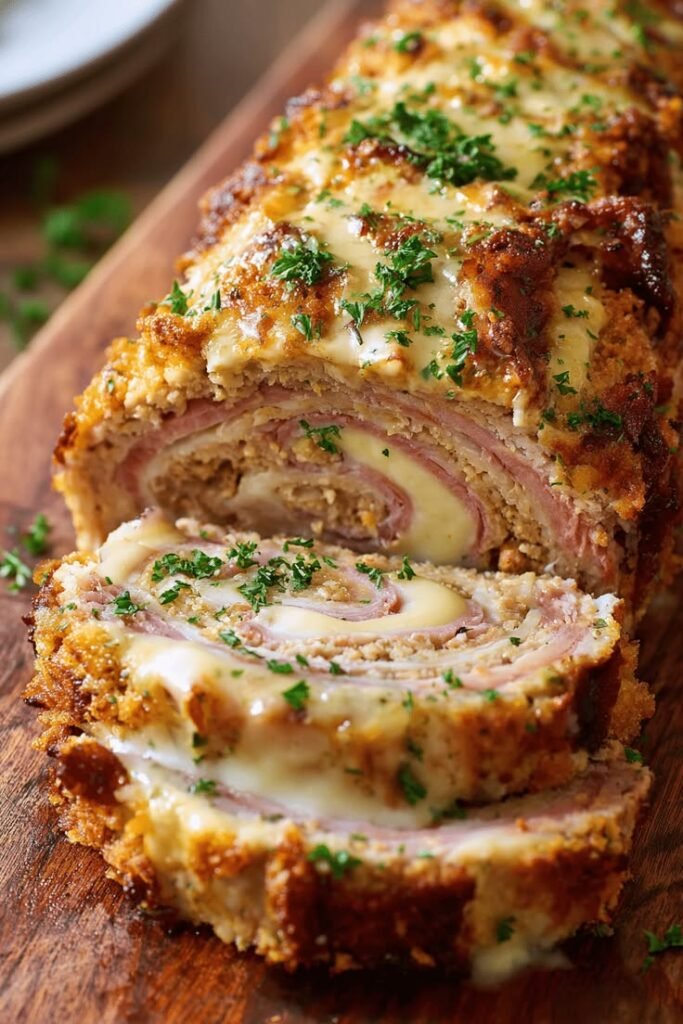
Chicken cordon bleu meatloaf brings together two familiar comfort foods in one satisfying centerpiece. It combines the tender, seasoned character of chicken meatloaf with the distinctive filled center associated with classic chicken cordon bleu. Ground chicken is blended with aromatics and seasonings to create a moist, cohesive outer layer, then shaped around sliced or shredded ham and a generous portion of cheese. As the loaf bakes, the filling softens and melts, turning an everyday dinner into something especially inviting.
Its appeal comes from the contrast of textures and flavors in every slice. The chicken mixture is savory, delicate, and juicy, while the ham contributes a smoky, salty depth that balances the mild meat. The cheese adds a creamy richness and, when served warm, can create the stretchy center that makes the dish visually memorable. A breadcrumb coating or topping completes the combination by forming a flavorful golden crust. It provides a lightly crisp surface against the tender loaf and helps seal in moisture as the chicken cooks.
This dish is also practical enough for regular family dinners while remaining polished enough for casual entertaining. The loaf can be assembled ahead of time, chilled until needed, and baked when convenient, making it useful for busy schedules and planned meals. After cooking, a short resting period allows the juices to redistribute and the cheese to settle, so the loaf can be cut into neat, attractive portions rather than falling apart. The finished texture should be fully cooked yet juicy, with a firm but tender exterior and a warm, creamy, gently stretchy filling at the center. Served with vegetables, salad, or simple potatoes, it offers familiar ingredients in a more creative and satisfying form.
Begin with ground chicken as the foundation of the loaf. Its mild flavor allows the ham, cheese, and seasonings to remain distinct while providing a tender texture. Ordinary breadcrumbs absorb moisture and help bind the mixture, giving it enough structure to hold its shape when sliced. Panko may be included for a lighter interior and a more noticeably textured crust, either alongside regular breadcrumbs or in place of part of them. Add one egg for additional binding, then mix in finely minced onion or shallot and garlic for savory depth. Season with salt and black pepper, adjusting the amount according to the saltiness of the ham and cheese.
Complementary seasonings can shape the character of the meatloaf without overpowering its filling. A small amount of Dijon mustard adds tang and reinforces the classic cordon bleu profile, while paprika contributes gentle warmth and color. Chopped parsley provides freshness, and Italian herbs offer a balanced blend of oregano, basil, and thyme. For the center, choose thin slices of ham that can be arranged in an even layer without creating excessive bulk. Swiss and Gruyère provide a traditional nutty flavor, while mozzarella, provolone, or mild cheddar offer reliable melting and a milder finish. Use enough cheese to create a distinct ribbon, but avoid overfilling.
Prepare the pan by lining it with parchment paper or coating it lightly with oil, then preheat the oven so the assembled loaf can bake immediately. Place another sheet of parchment or plastic wrap on the work surface, and pat the seasoned ground chicken mixture into an even rectangle. Consistent thickness promotes uniform cooking and makes rolling easier. Arrange the ham and cheese over the center, leaving a clear border on every side. Keeping the filling away from the edges is essential: the uncovered meat mixture can join together firmly during shaping, creating a seal that helps prevent cheese from escaping as it melts. Lift and fold the outer edges carefully, then press the seam closed before transferring the loaf to the prepared pan.
Begin by placing a large sheet of parchment paper on the work surface. Transfer the seasoned ground chicken mixture to the paper and press it into an even rectangle, approximately 1/2 inch thick. Keep the edges fairly straight and the thickness consistent so the meatloaf cooks evenly. Leave a small border around the perimeter, which will help prevent the filling from escaping when the loaf is rolled.
Arrange the ham in overlapping slices across the chicken, covering the surface evenly without extending beyond the edges. Place the cheese in a compact strip down the center, or create a narrow, even layer if using shredded cheese. Avoid overfilling, since excess cheese may force the seams apart or leak substantially during baking. Using the parchment as a guide, lift one long side of the chicken mixture and fold it over the filling. Bring the opposite side up and over, then press the overlapping seam together firmly. Pinch and smooth both ends closed, checking carefully for gaps or exposed cheese.
Once sealed, use the parchment to help roll or transfer the stuffed loaf so it rests seam-side down. Place it on a parchment-lined baking sheet or in a lightly greased loaf pan. For a crisp, golden exterior, combine breadcrumbs with a small amount of melted butter or oil, then press the mixture gently over the top and sides. This coating adds texture while also helping the surface brown evenly.
Bake the loaf until the exterior is browned and the center reaches 165°F (74°C). Check the thickest part with an instant-read thermometer rather than relying only on color, because ground chicken can appear cooked before it reaches a safe temperature. Avoid overbaking, which can dry the chicken and increase cheese leakage. If the crust browns too quickly, cover it loosely with foil. Let the finished meatloaf rest for 10 to 15 minutes before slicing. This pause allows the juices to settle and the melted filling to firm slightly, producing cleaner, easier-to-portion slices.
Serve the sliced meatloaf with creamy mashed potatoes for a traditional, comforting plate. Roasted carrots, broccoli, Brussels sprouts, or green beans add color and welcome texture, while a crisp mixed salad or another bright vegetable side helps balance the richness of the chicken, ham, and melted cheese. Because the loaf is already well seasoned and filled, it can stand alone without sauce. For extra moisture, however, offer a Dijon cream sauce, mushroom gravy, light pan gravy, or a simple herb sauce made with parsley, chives, and a little lemon.
The filling can be adapted to suit different tastes. Replace the ham with prosciutto for a saltier, more delicate flavor, or use smoked turkey for a milder option with gentle smokiness. Swiss, Gruyère, provolone, or mozzarella can replace the usual cheese, depending on whether you prefer a nutty, sharp, or especially stretchy center. For a vegetable accent, spread a very thin layer of well-drained spinach or roasted red peppers over the meat before rolling it. Fresh herbs and a little lemon zest mixed into the chicken provide a lighter, fresher variation.
Refrigerate leftovers in an airtight container once they have cooled, and use them within three to four days. Reheat individual slices gently in a covered skillet or in the oven until warmed through. Moderate heat helps preserve the cheese and prevents the chicken from becoming dry. Cooled portions may also be wrapped securely and frozen for longer storage. Thaw them in the refrigerator before reheating, and add a small splash of broth to the dish if the slices seem firm.
For easier entertaining, assemble the loaf ahead and keep it covered in the refrigerator until ready to bake. Before shaping the full loaf, cook a teaspoon of the meat mixture in a skillet and taste it, adjusting the salt, pepper, herbs, or seasoning as needed. After baking, allow the meatloaf to rest so the filling can settle. Use a sharp knife and clean it between cuts when necessary; this produces neat layers of chicken, ham, and melted cheese rather than compressing the center.