
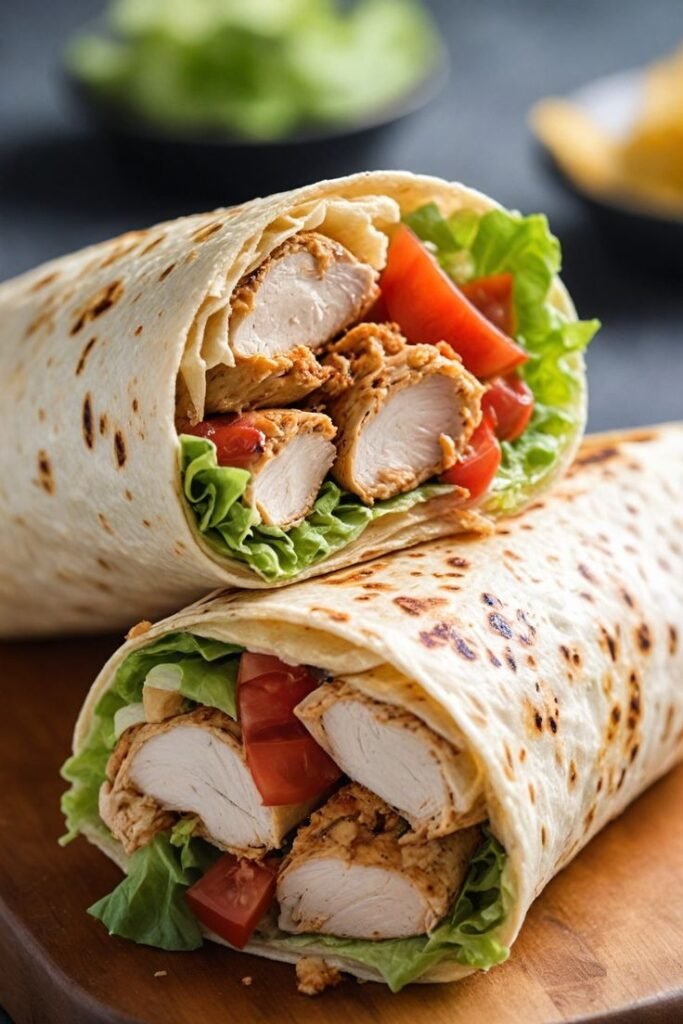
For these grilled chicken and vegetable wraps, begin with boneless, skinless chicken breasts or thighs. Breasts offer a lean, mild option, while thighs remain especially juicy and flavorful on the grill. The chicken is enhanced by a simple marinade of olive oil, lemon juice, minced garlic, paprika, dried herbs, salt, and freshly ground black pepper. Olive oil helps keep the meat moist, lemon juice adds brightness and tenderness, and garlic, paprika, and herbs create a savory, lightly smoky flavor.
Fresh vegetables provide contrast, color, and satisfying crunch. Use crisp lettuce as a cool, sturdy layer that helps support the filling. Juicy tomatoes add acidity and natural sweetness, while cucumber contributes refreshing texture. Sliced bell pepper brings mild sweetness and additional crunch, and thinly sliced red onion supplies a sharper flavor that balances the richness of the chicken and marinade. Select firm lettuce, ripe but not overly soft tomatoes, and vegetables that feel fresh and crisp for the best results.
Large flour tortillas or whole-wheat wraps form the practical base for the meal. Flour tortillas are soft and flexible, whereas whole-wheat wraps offer a heartier flavor and more fiber. Optional additions can make the wraps more substantial or creamy, including sliced avocado, shredded cheese, Greek yogurt sauce, hummus, or a light mayonnaise-based dressing. These additions can be used individually or combined according to preference.
The ingredients are easy to adapt for different dietary needs. Choose gluten-free wraps when required, and replace Greek yogurt or mayonnaise sauces with dairy-free alternatives made from plant-based yogurt, tahini, or blended avocado. For a vegetarian or vegan version, substitute the chicken with grilled tofu, tempeh, seasoned beans, or hearty mushrooms. Fresh, well-selected ingredients remain central to achieving balanced flavor and appealing texture.
Begin by preparing the chicken so every piece cooks evenly. Use boneless, skinless chicken breasts or thighs, and trim away visible fat, tough connective tissue, and any thin edges that may burn before the center is done. If the breasts vary considerably in thickness, place each piece between sheets of parchment or plastic wrap and gently flatten the thicker areas with a meat mallet or rolling pin. Aim for an even thickness rather than pounding the chicken aggressively, which can tear the meat and release its juices.
Place the trimmed chicken in a shallow dish or resealable bag, then add the marinade and turn the pieces until they are thoroughly coated on all sides. A brief marinating period of 20 to 30 minutes is useful when time is limited, while two to four hours in the refrigerator allows the herbs, seasonings, oil, and other flavors to penetrate more fully. Keep the chicken chilled while it marinates, and do not reuse the raw marinade unless it is boiled first. Because lemon juice is acidic, avoid leaving the chicken in this mixture overnight. Excessive exposure can make the surface soft or slightly tough instead of pleasantly tender.
Before cooking, preheat a grill or grill pan over medium-high heat. It should be hot enough for the chicken to sizzle immediately, but not so hot that the marinade burns before the center cooks. If the grates or pan are not well seasoned, lightly oil the cooking surface using a paper towel held with tongs. Remove excess marinade from the chicken, as dripping liquid can cause flare-ups, then place the pieces on the hot surface with space between them.
Grill the chicken until distinct sear marks appear and it releases easily from the grates or pan; forcing it too soon can tear the browned surface. Turn it once and continue cooking until the thickest portion reaches 165°F (74°C) on an instant-read thermometer. Check early, since thin pieces can overcook quickly. Transfer the cooked chicken to a clean plate and let it rest for five minutes. This short pause allows the juices to redistribute, helping each slice remain moist when cut into strips for the wraps.
While the chicken cooks or rests, prepare the vegetables and remaining wrap components so assembly can proceed efficiently. Separate the lettuce leaves, rinse them thoroughly under cool running water, and inspect for grit or damaged edges. Pat each leaf dry with clean kitchen towels, or use a salad spinner, because excess water can make the tortilla soggy. If time allows, refrigerate the dried lettuce until needed to preserve its crisp texture.
Wash the tomatoes and use a sharp knife to cut them into thin slices without crushing the flesh. If they are especially juicy, remove some seeds or let the slices drain briefly on a paper towel. Cut the cucumber lengthwise and slice it into slim half-moons. Remove the stem and seeds from the bell pepper, then cut it into narrow strips. Slice the onion thinly, keeping the pieces manageable rather than long or bulky. Uniform cuts help every bite receive a balanced amount of filling and make the wraps easier to roll. Keep the prepared vegetables chilled in separate covered portions, and avoid combining them until assembly to limit moisture transfer.
A lemon-herb yogurt dressing provides a light, complementary sauce. Stir plain Greek yogurt with a little lemon juice, finely chopped parsley or dill, minced garlic, salt, and black pepper. Add a small splash of water if the mixture is too thick, or more yogurt if it is too sharp. Taste and adjust the seasoning gradually; additional lemon brightens the dressing, while salt and herbs deepen its flavor. Garlic hummus or a creamy avocado spread can be used instead, particularly when a richer or dairy-free option is preferred.
Warm the tortillas gently in a dry skillet over low heat, turning them once, or cover them with a damp paper towel and microwave them briefly. They should become flexible and pliable, not crisp or dry. Arrange the lettuce, vegetables, sauce, and sliced chicken in separate portions before starting. This simple mise en place makes assembly faster, keeps quantities consistent, and allows each tortilla to be filled and rolled while its components remain fresh.
Begin by warming each tortilla briefly in a dry skillet or microwave so it becomes flexible without turning crisp. Lay one tortilla flat on a clean work surface and spread a thin, even layer of sauce across the center, leaving a border around the edge. Ranch, yogurt dressing, hummus, or a light herb sauce can all work well. Place a small handful of lettuce near the center, then arrange the sliced grilled chicken over it. Add tomatoes and the remaining vegetables, distributing them in a compact line rather than piling them high.
Finish with optional toppings such as shredded cheese, diced avocado, fresh herbs, or a squeeze of lemon. Avoid overfilling, since too many ingredients can split the tortilla and make the wrap difficult to eat. Keep the filling roughly one-third of the tortilla’s width. To close it, fold both sides inward over the filling, then lift the bottom edge and roll firmly upward, tucking the ingredients inside as you go. Place the wrap seam-side down for serving, or secure it briefly with parchment or a toothpick.
For a neat presentation, cut each wrap diagonally through the center. Serve it with a simple green salad, roasted vegetables, fresh fruit, or a light soup for a balanced meal. The basic combination is also easy to customize. Add chipotle seasoning or a little hot sauce for smoky heat, or use Mediterranean herbs, cucumber, olives, and feta for a brighter variation. Barbecue sauce creates a sweeter, more casual version, while shredded cabbage, carrots, radishes, or bell peppers provide extra crunch.
For storage, keep the chicken, vegetables, lettuce, sauce, and tortillas separate whenever possible and assemble portions just before eating. If the wraps must be prepared in advance, wrap them tightly in parchment or food-safe wrap and refrigerate them. Consume them promptly, preferably the same day, because moisture from the vegetables and sauce can soften the tortilla and diminish the lettuce’s crisp texture.