
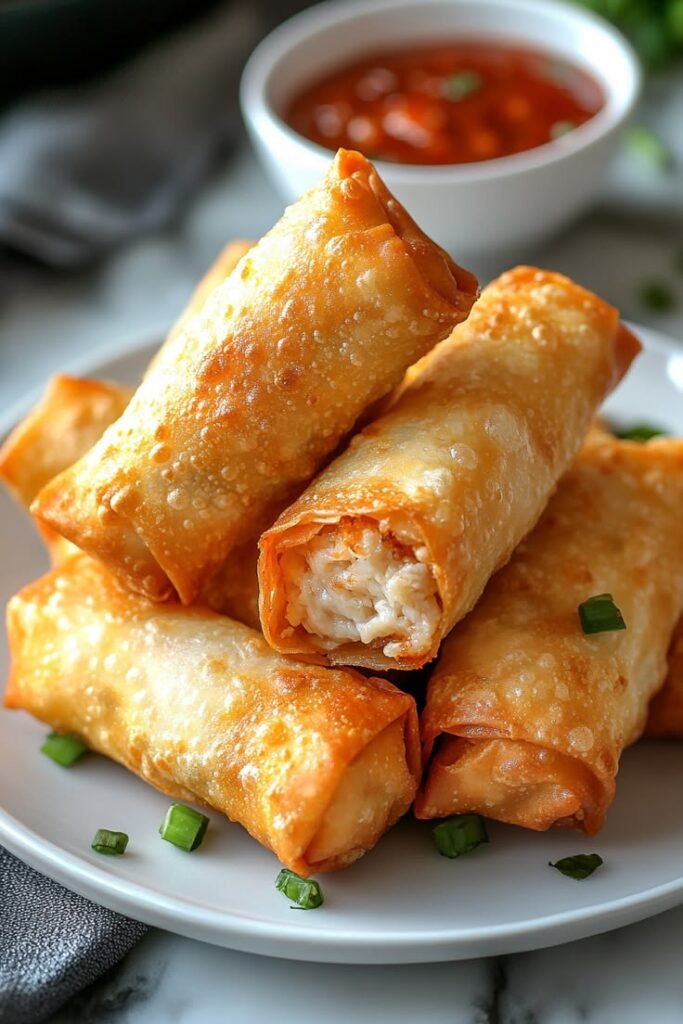
Crab rangoon egg rolls bring together two familiar favorites in one satisfying appetizer. They borrow the creamy, savory center of classic crab rangoon and pair it with the larger, sturdier wrapper associated with an egg roll. The result is a hand-held bite with a golden exterior that crackles as it breaks, revealing a smooth, rich filling underneath.
Inside each roll, softened cream cheese creates the luxurious base, while crab adds delicate seafood flavor and a pleasantly tender texture. Aromatics such as green onion, garlic, or ginger can add freshness and depth, and savory seasonings help balance the richness without overpowering the crab. A well-mixed filling should taste flavorful but remain cohesive, so every bite includes a satisfying combination of creamy cheese, crab, and seasoning.
The contrast in textures is a major part of the appeal. The wrapper becomes crisp and lightly blistered during cooking, while the center stays warm and velvety. Because egg roll wrappers are more substantial than traditional wonton wrappers, they also provide a generous shell that holds the filling securely and makes the appetizer feel more substantial. Served with sweet chili sauce, soy-based dipping sauce, or another complementary dip, these rolls are easy to customize.
They are especially well suited to parties, game-day gatherings, holiday menus, and relaxed weekend snacks. The rolls can be prepared ahead of time, arranged for convenient cooking, and served in portions that guests can enjoy without utensils. Their familiar ingredients and appealing presentation make them approachable for a range of tastes, while their indulgent texture gives them a special-occasion quality.
The essential techniques are straightforward but important. The filling must be balanced so it is creamy without becoming loose or watery. Wrappers should be filled moderately and sealed firmly to prevent leaks during cooking. Finally, the rolls need enough heat to turn crisp and golden without absorbing excess oil or leaving the filling greasy. With careful preparation, crab rangoon egg rolls deliver a polished appetizer that is crunchy, creamy, savory, and remarkably easy to share.
For a creamy crab rangoon egg roll filling, softened cream cheese provides the smooth, rich base that binds the ingredients together. Allow it to sit at room temperature until easily stirred, but do not melt it, as a loose base can make the mixture difficult to wrap. Use crab meat as the primary seafood component. Canned crab is convenient, while imitation crab offers a milder, budget-friendly option with a firm texture.
Drain canned crab thoroughly and press it gently in a fine-mesh strainer or between paper towels to remove excess liquid. If using imitation crab, check for moisture after thawing and pat it dry as needed. Pick through the meat for shell fragments, then flake it into small, manageable pieces. Removing excess moisture is essential because a wet filling may leak during cooking or leave the egg rolls soggy.
Green onions, garlic, or fresh chives add brightness, mild sharpness, and an appealing contrast to the rich cream cheese. Finely chop these aromatics so their flavor distributes evenly without weakening the wrappers. A small amount of soy sauce or Worcestershire sauce contributes savory depth and enhances the crab without overpowering it. Add only enough to season the mixture, since both ingredients can be salty.
Optional additions can tailor the filling to personal preference. A little lemon juice provides acidity and balances the richness, while a few drops of sesame oil add a warm, nutty aroma. Shredded cheese creates extra stretch and richness, and a small spoonful of mayonnaise makes the mixture softer and more luxurious. Use these additions sparingly to maintain a firm consistency. To prepare the filling, stir the softened cream cheese until smooth, fold in the flaked crab, add the finely chopped aromatics and seasonings, and mix until evenly combined. Taste the mixture before filling the wrappers, adjusting seasoning or acidity as needed. If it appears loose, add more crab or cream cheese rather than extra liquid, and chill it briefly before assembly.
Keep the egg roll wrappers covered throughout assembly so they remain pliable. Remove only one wrapper at a time, then place the remaining stack beneath a clean, slightly damp kitchen towel. If the wrappers dry out, they can crack while folding and may allow the filling to escape during cooking.
Set one wrapper on the work surface in a diamond position, with a corner facing you. Spoon an appropriate amount of crab mixture near the lower corner, leaving enough space along the edges to fold and seal the roll. Avoid overfilling; a compact portion, usually about two tablespoons, makes a tighter roll and helps prevent splitting.
Lift the bottom corner over the filling and tuck it underneath gently. Fold the left and right corners inward so they overlap the filling and create a neat envelope. Roll the egg roll upward toward the remaining corner, keeping moderate, even tension. The roll should be snug, but do not pull so forcefully that the wrapper tears or the filling squeezes out.
Moisten the final corner with water, or brush it with a thin flour-and-water paste for a stronger seal. Press it firmly against the roll, then inspect every egg roll for open edges or loose seams. Repair any gaps before cooking, since even a small opening can release the creamy filling into hot oil or onto the baking tray.
Deep-frying produces the most blistered, crisp, restaurant-style crust. Heat the oil steadily and maintain its temperature, adding rolls in small batches so it does not drop sharply. Leave space between them, turn them as needed, and cook until evenly golden. Transfer finished rolls to a wire rack rather than directly onto paper towels, which can trap steam and soften the wrapper.
For a lighter option, air-fry the rolls with minimal oil, leaving space around each one for circulation. Turn them halfway through, or shake the basket when appropriate, until crisp and browned. Oven baking is convenient for larger batches; arrange the rolls in a single layer with room between them and turn them during cooking for more even browning. In every method, the filling only needs to become hot, because the wrapper is what requires thorough browning and crisping.
Serve crab rangoon egg rolls immediately after cooking, when the wrappers are deeply golden and crisp and the crab-and-cream-cheese filling is warm. Sweet chili sauce is the primary pairing: its glossy texture and balance of sweetness, acidity, and mild heat complement the rich interior without overpowering it. For more variety, offer a soy-ginger dip, spicy mayonnaise, or plum sauce alongside the main bowl. A quick homemade option combines rice vinegar, sesame oil, and chili crisp; adjust the chili crisp to suit the preferred level of heat.
Arrange the egg rolls on a serving platter with sliced green onions, toasted sesame seeds, fresh cilantro, or lemon wedges. These garnishes add color and provide bright, fresh flavors that offset the creamy filling. Avoid covering the cooked rolls, since trapped steam can soften the wrappers. If serving a larger batch, place the finished pieces on a wire rack set over a baking sheet and keep them in a low oven briefly. The rack allows air to circulate and helps preserve their crisp texture, but the egg rolls are best served as soon as possible.
For make-ahead preparation, assemble the uncooked rolls and arrange them in a single layer on a parchment-lined tray, making sure they do not touch. Cover the tray well and refrigerate the rolls for a short period before cooking. For longer storage, freeze them in a single layer until firm, then transfer them to an airtight freezer container or bag. Cook chilled rolls according to the recipe. Frozen rolls can usually be cooked directly from frozen, but they may require several additional minutes; monitor them carefully and confirm that the filling is thoroughly hot.
Reheat leftovers in an oven or air fryer until hot and crisp, turning them once if needed. Microwaving is convenient but tends to make egg-roll wrappers soft and chewy because steam becomes trapped inside. Flavor variations can include minced jalapeño, finely diced water chestnuts, shredded cabbage, chopped shrimp, or extra herbs. Add these ingredients in moderation and keep the mixture cohesive so the signature creamy texture remains intact.