
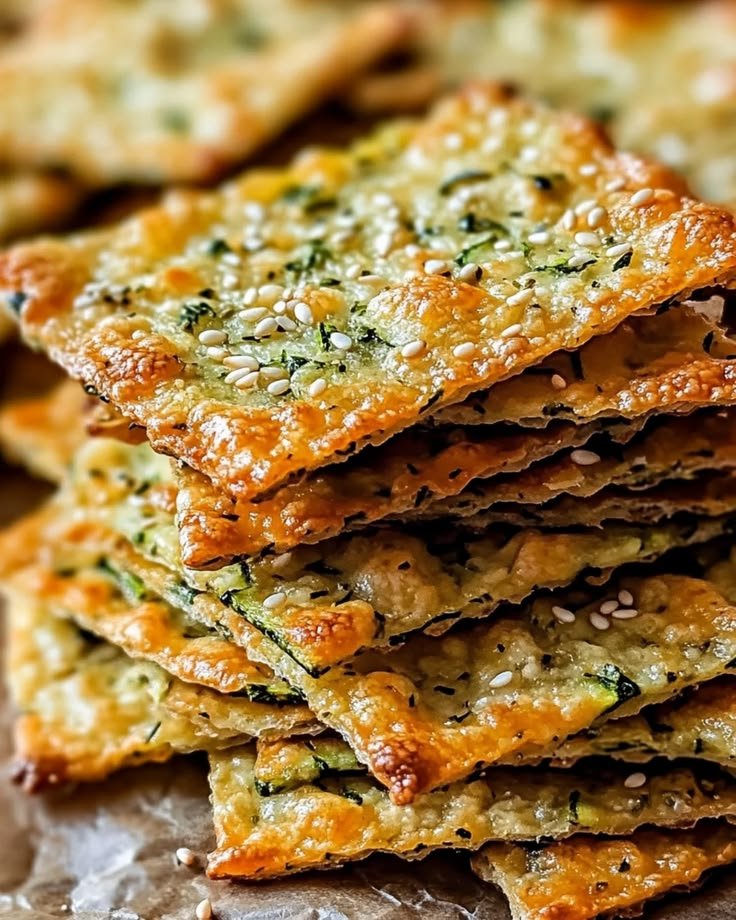
Crispy zucchini herb crackers offer a practical, flavorful alternative to highly processed packaged snacks. Rather than relying on refined starches, excess salt, or long ingredient lists, these homemade crackers combine grated zucchini with wholesome pantry staples. The result is a savory snack that can fit comfortably into lunch boxes, afternoon snack plates, or casual entertaining. Their delicate vegetable flavor remains subtle, while herbs and seeds provide enough character to make each bite satisfying.
Grated zucchini contributes more than flavor. Its natural moisture helps bring the dough together, while its fiber and vitamin content add nutritional value to a snack that might otherwise be based mainly on flour. Fresh or dried herbs introduce aroma and savory depth, and seeds can provide a pleasant crunch along with texture and beneficial fats. Whole-grain flour or other nutrient-dense ingredients further enhance the crackers, creating a balanced combination of crispness, flavor, and substance without making the finished product heavy.
Preparing crackers at home also gives the cook greater control over sodium, oils, seasonings, and additives. The amount of salt can be adjusted to suit individual preferences, herbs can be varied according to the meal, and unnecessary preservatives or artificial flavorings can be left out entirely. The ideal batch is rolled thin enough to become crisp, with lightly browned edges and a tender, savory vegetable note at the center. Achieving that texture begins by squeezing or otherwise removing excess water from the zucchini. The drier vegetable is then mixed with the remaining ingredients to form a cohesive dough, rolled evenly, and scored into individual portions. Baking continues until the pieces are dry and fully crisp, with additional cooling helping them firm before serving or storing.
Fresh zucchini provides the defining vegetable flavor, gentle sweetness, and moisture in these savory crackers. Choose a firm, medium-sized zucchini and grate it finely so it blends evenly into the dough. Because zucchini releases considerable water, squeeze the grated vegetable thoroughly in a clean towel before measuring. Excess moisture can make the dough sticky and may prevent the crackers from becoming crisp.
Whole-wheat flour contributes a nutty taste, fiber, and a sturdy texture. An equal amount of all-purpose flour produces a lighter, more delicate cracker, while spelt flour offers a mildly sweet, earthy character. For a gluten-free version, use a reliable gluten-free flour blend containing a binder such as xanthan gum. Flour choice affects absorption and structure, so add liquid or flour gradually rather than relying on a fixed dough consistency.
Olive oil supplies richness, helps the crackers brown, and improves their crisp, tender bite. A mild oil preserves the herb flavor, whereas extra-virgin olive oil adds a more pronounced fruity note. Salt sharpens the zucchini and herbs, but it can be reduced for a lower-sodium recipe by using more garlic, pepper, citrus zest, or nutritional yeast. Nutritional yeast also provides savory depth without dairy; grated Parmesan creates a saltier, more concentrated cheese flavor and should be reduced alongside the salt.
Combine herbs according to the desired profile. Rosemary and thyme create a woodsy blend, oregano and basil give a Mediterranean character, and dill and parsley provide a fresher, greener finish. Fresh herbs are generally brighter but less concentrated than dried herbs; use roughly three times as much fresh herb as dried, adjusting to taste. Garlic powder, onion powder, black pepper, or chili flakes can add warmth and complexity.
For added texture, sprinkle sesame, sunflower, or pumpkin seeds over the rolled dough, pressing them gently into the surface. Vegan crackers can use nutritional yeast instead of Parmesan, while dairy-free versions require the same substitution. Gluten-free flour may need extra binding, and wetter zucchini may require additional flour. These adjustments influence handling, baking time, and final crispness.
Begin by washing the zucchini thoroughly and trimming the ends. Finely grate it using the small holes of a box grater, then transfer the shreds to a clean kitchen towel or a piece of cheesecloth. Gather the cloth around the zucchini and squeeze firmly over a bowl or sink. Continue pressing until very little liquid comes out. This is the most important step for crisp crackers: excess moisture can leave them soft, bendable, or chewy rather than thin and crunchy.
Place the well-drained zucchini in a mixing bowl. Add the flour, dried herbs, seasonings, and oil, then stir until the ingredients come together into a soft dough. Mix only until combined to avoid developing too much gluten, which can make the crackers tough. If the dough feels sticky, add flour gradually, about one teaspoon at a time, until it is manageable. Add only enough to prevent sticking; an overly dry dough may produce hard, crumbly crackers.
Place the dough between two sheets of parchment paper. Roll it evenly to approximately one-eighth inch thick, maintaining a consistent thickness so the crackers finish baking at the same time. Peel away the top parchment and transfer the dough, still on the bottom sheet, to a baking tray. Score it into squares or rectangles with a knife or pizza cutter, without necessarily cutting all the way through. Prick each piece with a fork if the dough tends to puff during baking.
Bake at a moderate temperature until the edges turn golden and the surface appears dry. Remove the tray and carefully separate the scored pieces. Return them to the oven briefly so the centers can lose any remaining moisture and become crisp. Rotate the baking sheet if your oven browns unevenly, and check thinner sections early, as they may finish before thicker areas. If some pieces are ready first, remove them and continue baking the rest.
Allow the crackers to cool completely on the baking sheet or a wire rack before judging their texture. They become noticeably firmer as they reach room temperature. Once fully cool, store them in an airtight container to preserve their crispness.
Crispy zucchini herb crackers are versatile enough for everyday snacking, lunchboxes, entertaining, and casual parties. Serve them alongside hummus, white-bean dip, whipped feta, guacamole, cottage cheese, or herbed cream cheese for a satisfying combination of crisp texture and creamy richness. They also pair well with roasted vegetable spreads and tomato salsa. For a lunchbox, pack the crackers separately from moist dips and fresh fruit so they remain crisp until serving. On an appetizer board, arrange them with olives, sliced vegetables, cheese, and small bowls of dip.
The flavor can be adapted to suit different menus. Add lemon zest and dill for a bright lemon-dill variation, or combine rosemary with garlic for a more robust herbal profile. Chopped Mediterranean olives and dried oregano create a savory, briny version, while chili and lime bring heat and acidity. For a richer cracker, incorporate finely grated hard cheese and plenty of freshly ground black pepper. Add-ins should be minced or grated finely so they do not tear the dough or prevent even rolling.
If the crackers remain soft, excess zucchini moisture is usually the cause. Salt and drain the grated zucchini thoroughly, then squeeze it firmly in a clean towel before mixing the dough. Roll the dough evenly and fairly thinly; thicker pieces require longer baking and may stay tender in the center. If the edges brown too quickly, lower the oven temperature slightly or move the tray to a higher rack only after checking that the crackers are drying evenly. Allow them to remain in the switched-off oven, with the door slightly ajar, for a short post-baking drying period if needed. Crackers that crumble during rolling may need a small amount of additional binding moisture, added sparingly.
Cool the crackers completely before transferring them to an airtight container. Keep them at room temperature for several days in a dry cupboard. If they lose their crunch, re-crisp them briefly in a moderate oven and cool them again before serving. Freezing is also possible: protect the crackers carefully from moisture with airtight wrapping and a freezer-safe container, then refresh them in the oven after thawing to restore their crisp texture.