
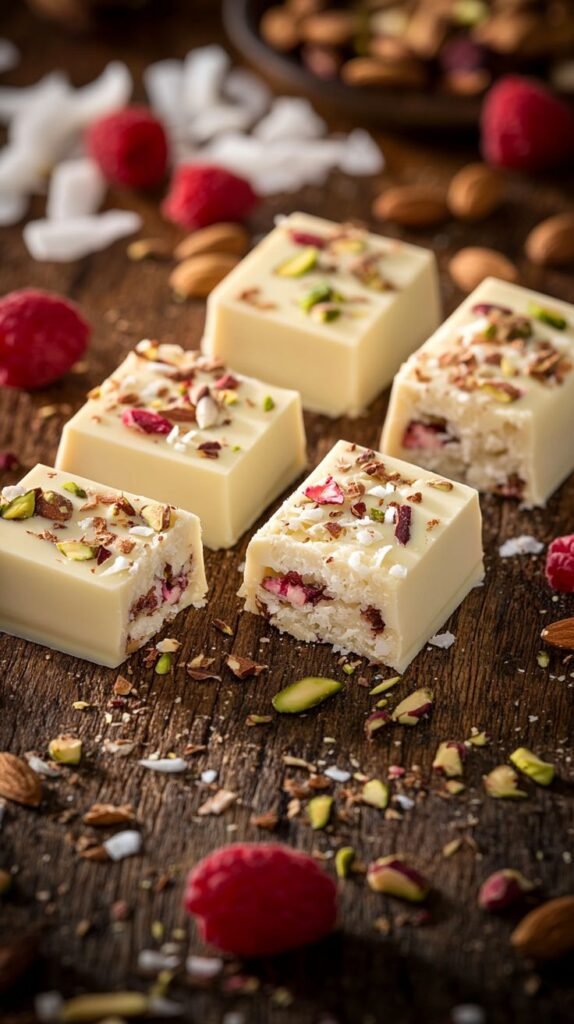
These homemade coconut almond bars bring together a rich combination of chewy coconut, fragrant toasted almonds, and a smooth chocolate coating. The center is tender and pleasantly dense, with enough structure to hold its shape while still offering a soft, satisfying bite. Toasting the almonds deepens their natural flavor and adds a gentle crunch that complements the delicate texture of the coconut. Once covered in melted chocolate, the bars become an especially indulgent treat with a polished, confectionery finish.
The appeal lies in the contrast between the layers. Depending on the chocolate and chilling time, the shell may set into a crisp coating that breaks lightly when bitten, or remain softly melting and luxurious at room temperature. Natural coconut sweetness provides the foundation, while almonds contribute a warm, nutty depth. Dark or bittersweet chocolate balances both ingredients with a richer flavor and restrained sweetness, preventing the bars from becoming overly sugary. Each piece offers a blend of creamy, chewy, crunchy, and crisp textures in one compact dessert.
These coconut almond bars are versatile enough for a dessert tray, an edible gift, or an afternoon treat served with coffee or tea. They are also well suited to make-ahead preparation, since the finished pieces can be chilled or stored in the freezer for a convenient snack. The method follows a straightforward sequence: first, combine the coconut and toasted almonds into a cohesive mixture; then chill it until firm enough to handle. Cut the slab into neat bars, dip each piece into melted chocolate, or spread the coating over the top and sides. A final period of chilling allows the shell to set, leaving a homemade confection that looks elegant while requiring no specialized equipment.
Shredded unsweetened coconut forms the foundation of the filling, providing its characteristic tropical flavor and pleasantly chewy texture. Almond flour, or finely ground almonds, adds richness while giving the mixture enough structure to hold together. Chopped or slivered almonds contribute a contrasting crunch and make each bar more substantial. For the binder, choose condensed milk, maple syrup, honey, or powdered sugar mixed with a suitable moist ingredient. The amount and type of sweetener will influence both consistency and flavor, so add it gradually rather than all at once. A small quantity of vanilla extract rounds out the nutty notes, while a pinch of salt prevents the filling from tasting flat.
The coconut used also affects the final sweetness. Unsweetened coconut gives you greater control and allows the almond flavor to remain prominent. Sweetened coconut produces a more dessert-like bar and may require less condensed milk, syrup, honey, or powdered sugar. Check the texture and taste of the mixture as you work, especially when combining already sweet ingredients.
If a deeper, more pronounced nutty flavor is desired, gently toast the almonds in a dry skillet or oven until lightly golden. Watch them closely, as nuts can burn quickly. Allow them to cool before combining them with the shredded coconut and almond flour. Mix all dry ingredients thoroughly so the coconut, ground almonds, and crunchy pieces are distributed evenly throughout the filling.
Add the chosen binder in small additions, stirring after each one, until the mixture becomes moist and cohesive without turning wet or greasy. It should hold its shape when pressed between your fingers. If it seems too soft, mix in a little more shredded coconut. If it will not hold together, add a small amount of binder and mix again.
Line a loaf pan or square baking pan with parchment paper, leaving enough overhang to lift the finished slab out easily. Transfer the mixture to the pan and press it firmly into an even layer, paying particular attention to the corners. Smooth the surface with the back of a spoon or a flat measuring cup. Chill the filling thoroughly before coating it with chocolate; adequate chilling firms the mixture and helps you slice clean, even bars without crumbling.
Once the coconut-almond slab is thoroughly chilled and firm, lift it from the pan using the parchment overhang. Set it on a clean cutting board and peel away the paper carefully. With a sharp chef’s knife, trim the edges if necessary, then cut the slab into evenly sized bars or small bite-sized squares. For the cleanest results, press the knife straight down rather than sawing through the layers. Wipe the blade with a warm, slightly damp cloth between cuts to remove crumbs and filling residue. If the pieces begin to soften while you work, return them to the refrigerator for 10 to 15 minutes before continuing.
Prepare the chocolate coating while the cut pieces chill. Use good-quality dark, semisweet, or milk chocolate, depending on the desired balance of richness and sweetness. Melt it gently over a double boiler, keeping the bowl above—not in contact with—the simmering water. Alternatively, microwave the chocolate in short 15- to 20-second intervals, stirring thoroughly after each interval. Frequent stirring distributes the heat and helps prevent scorching. For a thinner, smoother coating, stir in a small amount of coconut oil after the chocolate has melted. Use this addition sparingly, however, because too much can leave the shell soft at room temperature.
There are two simple ways to coat the bars. For a fully enclosed chocolate shell, place each piece on a fork, lower it into the melted chocolate, and turn it gently until completely covered. Lift it above the bowl and allow excess chocolate to drip away. For an easier finish, arrange the bars on a wire rack set over parchment and spoon the chocolate over their tops, allowing it to run down the sides. Transfer the coated pieces to parchment before the chocolate sets.
Decorate immediately with toasted coconut, chopped almonds, flaky salt, or a fine chocolate drizzle. Leave the bars at cool room temperature until firm, or refrigerate them briefly to speed setting. Store the finished pieces in a sealed container, separating layers with parchment.
Once the chocolate shell has been applied, place the coconut almond bars in the refrigerator until the coating is fully firm, usually for 30 to 60 minutes. After chilling, let them rest at room temperature for 10 to 15 minutes before serving. This brief pause softens the center slightly, creating the pleasantly tender texture that contrasts with the crisp chocolate exterior. For cleaner portions, use a sharp knife warmed under hot water and wiped dry between cuts.
Store the finished bars in an airtight container, separating each layer with parchment paper to prevent sticking and protect the chocolate surface. They can generally remain fresh in the refrigerator for about one week. Refrigeration is especially important when the filling contains highly perishable binders or ingredients. For longer storage, arrange the bars in a sealed, freezer-safe container and freeze them for up to two months. Thaw them in the refrigerator rather than at room temperature; gradual thawing helps preserve both the chocolate coating and the texture of the coconut-almond center.
These treats pair naturally with coffee, tea, or a small espresso. For a more indulgent dessert, serve a bar beside a scoop of vanilla ice cream. The recipe can also be customized without losing its coconut-almond character. Roasted almonds provide a deeper flavor, while a small amount of almond extract creates a more pronounced nutty aroma. Orange zest or finely chopped dried fruit adds brightness. Unsweetened dark chocolate produces a less-sweet finish, and a pinch of sea salt gives the shell a refined salted-chocolate note.
If the center crumbles, press the mixture more firmly into the pan and chill it thoroughly before coating. An overly soft filling usually needs additional refrigeration or slightly less liquid binder. Cracked chocolate may result from chilling the bars too abruptly or cutting them while the shell is rigid, so allow a short resting period first. Uneven cuts are often caused by an unheated or blunt knife. Thorough chilling and gentle chocolate melting remain the essential techniques for polished homemade bars.