Understanding Protein’s Role in a Healthy Diet
Protein is an essential macronutrient that plays a crucial role in the human body. It is vital for the growth and repair of tissues, making it a key component for muscle building and recovery. In addition to its importance for athletes and active individuals, protein also significantly contributes to overall health, impacting various bodily functions.
There are two primary sources of protein: animal-based and plant-based. Animal sources, which include meat, poultry, fish, dairy, and eggs, generally provide complete proteins, meaning they contain all nine essential amino acids that the body cannot produce on its own. Conversely, many plant-based proteins, such as beans, lentils, nuts, and grains, may lack one or more of these essential amino acids, thus termed incomplete proteins. However, through a combination of different plant sources, it is possible to achieve a complete amino acid profile.
The recommended daily intake of protein varies by age, sex, and activity level, but general guidelines suggest that adults should aim for 46-56 grams of protein per day. This intake is crucial for maintaining muscle mass, especially as one ages. Incorporating high-protein meals into daily diets can aid in weight management by promoting satiety, which helps to control hunger and decrease cravings. As a result, individuals may find it easier to maintain a healthy weight.
High-protein diets are also associated with numerous health benefits, such as improved cardiovascular health, enhanced brain function, and better metabolic rate. Notably, consuming protein-rich meals can help stabilize blood sugar levels, providing sustained energy throughout the day. Thus, making informed choices about protein sources, whether animal or plant-based, is essential for achieving long-term wellness and a balanced diet.
Key Ingredients for High-Protein Bowls
When crafting a high-protein bowl, selecting the right ingredients is essential to ensure a nutritious and satisfying meal. These bowls can be versatile and adaptable, but certain elements stand out when considering potential protein sources.
Legumes, such as lentils, chickpeas, and black beans, provide excellent plant-based protein options. They are rich in fiber, which enhances digestive health while adding substantial bulk to your meals. Incorporating various legumes can not only increase protein content but also introduce diverse flavors and textures.
Animal-based proteins are another dominant category to consider for high-protein bowls. Poultry, such as chicken and turkey, offers lean protein sources that can be grilled, roasted, or shredded for easy incorporation. Fish, particularly salmon, is also an ideal choice, being high in omega-3 fatty acids and protein, thus promoting heart health and overall wellness.
Dairy products, like Greek yogurt and cottage cheese, serve as creamy and rich protein bases. Greek yogurt can be a delightful dressing alternative or base, while cottage cheese adds texture and a protein boost when mixed with fruits and seeds.
Nuts and seeds are nutrient-dense ingredients that contribute not only protein but also healthy fats. Almonds, walnuts, chia seeds, and pumpkin seeds can enrich a high-protein bowl while also providing essential vitamins and minerals.
Additionally, whole grains, such as quinoa, brown rice, or farro, can serve as a satisfying base that adds both protein and fiber. Combining these grains with a variety of colorful vegetables ensures a balanced and appealing bowl. Leafy greens, cherry tomatoes, bell peppers, and broccoli contribute essential vitamins and minerals while enhancing the meal’s visual appeal.
In summary, by thoughtfully combining these high-protein ingredients—legumes, meats, dairy, nuts, seeds, and grains—along with vegetables and healthy fats, you can create delicious and nourishing bowls that support your protein needs and overall health.
Top 20 High-Protein Bowl Recipes
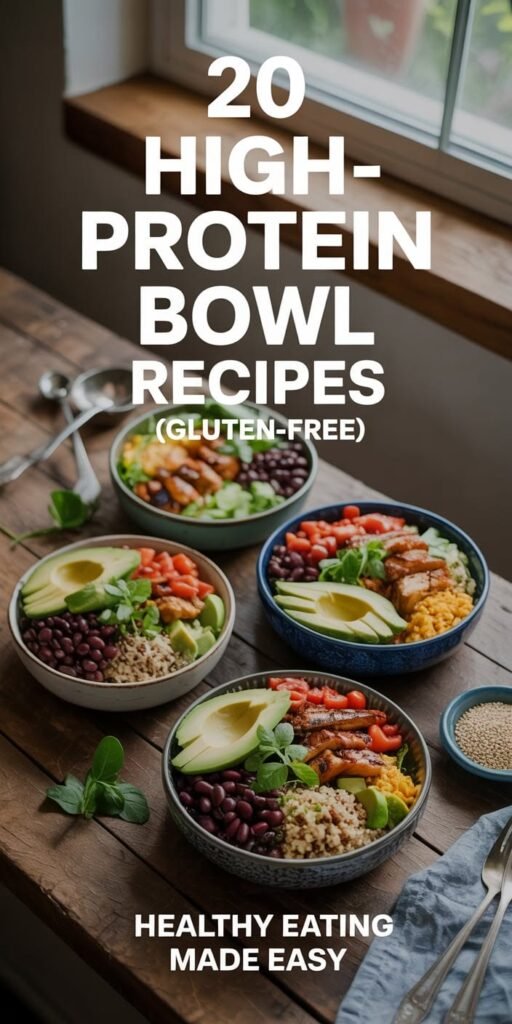
High-protein bowls can provide a versatile and nutritious option for meals, catering to a variety of dietary preferences. Below is a curated list of 20 unique high-protein bowl recipes, each offering different flavors, main ingredients, and essential nutritional highlights.
1. Quinoa and Black Bean Bowl: This vibrant bowl combines fluffy quinoa, black beans, corn, and avocado, providing a delightful Mexican-inspired flavor. It’s rich in protein and fiber.
2. Chicken Caesar Salad Bowl: A classic dish made with grilled chicken, romaine lettuce, low-fat Caesar dressing, and topped with parmesan cheese. This dish is packed with protein, perfect for a hearty meal.
3. Tofu Stir-fry Bowl: Firm tofu sautéed with bell peppers, broccoli, and a savory soy-based sauce. This vegan option is not only high in protein but also rich in antioxidants.
4. Mediterranean Chickpea Bowl: A mix of chickpeas, cucumbers, tomatoes, olives, and feta cheese, providing a refreshing taste. This recipe is vegetarian and high in plant-based protein.
5. Salmon and Brown Rice Bowl: Flaked salmon served over nutty brown rice, garnished with steamed asparagus and a drizzle of lemon juice. This bowl is a great source of omega-3 fatty acids and protein.
6. Lentil and Sweet Potato Bowl: A comforting bowl with spiced lentils, roasted sweet potatoes, and a dollop of yogurt. High in protein and vitamins, this recipe appeals to both vegans and vegetarians.
7. Shrimp and Avocado Bowl: Grilled shrimp, fresh avocado, and lime-cilantro rice combine for a flavorful dish rich in protein and healthy fats.
8. Beef and Broccoli Bowl: Tender beef stir-fried with broccoli in a savory sauce, served over steamed rice. This bowl is particularly appealing to those looking for a protein-rich option.
9. Edamame and Brown Rice Bowl: Featuring edamame, brown rice, and baby spinach, this vegan-friendly dish is not only high in protein but also incredibly nutrient-dense.
10. Greek Yogurt Parfait Bowl: For a breakfast option, this bowl layers Greek yogurt, mixed berries, and granola, delivering a delicious way to enjoy protein at the start of your day.
11. Peanut Butter Banana Protein Bowl: A sweet yet nutritious option, combining peanut butter with banana slices and a sprinkle of chia seeds, perfect for an energy boost.
12. Farro and Vegetable Bowl: Nutty farro paired with roasted vegetables such as zucchini and carrots. This vegetarian recipe is an excellent source of protein and fiber.
13. Poke Bowl with Ahi Tuna: Cubed ahi tuna served over sushi rice, garnished with seaweed and sesame seeds. This dish is popular for its fresh flavors and high protein content.
14. Vegan Taco Bowl: A mix of lentils, quinoa, and avocado served in a bowl style, providing a delicious twist on traditional tacos while ensuring high protein levels.
15. Egg and Spinach Breakfast Bowl: An egg-based bowl paired with sautéed spinach and whole-grain bread for a balanced, protein-rich breakfast.
16. Curried Cauliflower and Chickpea Bowl: A spicy, vegan dish featuring curried cauliflower and chickpeas served over basmati rice. Rich in protein, this dish is both filling and flavorful.
17. Turkey and Quinoa Bowl: Ground turkey mixed with quinoa and assorted vegetables results in a high-protein meal that is both satisfying and nutritious.
18. Baked Falafel Bowl: Baked falafel served on a bed of mixed greens with tahini sauce offers a crunchy, flavorful vegan option rich in protein.
19. Cottage Cheese and Fruit Bowl: Cottage cheese paired with seasonal fruits provides a light yet protein-packed meal or snack that is easy to prepare.
20. Balsamic Chicken and Veggie Bowl: Grilled balsamic chicken with a variety of roasted vegetables presents a healthy, protein-filled dish that is both colorful and delicious.
These diverse recipes can cater to various dietary preferences, ensuring everyone can find a high-protein bowl that suits their taste and nutritional needs.
Tips for Meal Prepping and Customizing Your Bowls
Meal prepping high-protein bowls can be an efficient way to ensure healthy eating throughout the week. The first step in the meal prep process is to select a variety of ingredients that provide protein, including options such as grilled chicken, tofu, beans, or quinoa. Preparing these components in bulk not only saves time but also allows for better portion control.
When it comes to storing ingredients, it is essential to use airtight containers to maintain freshness. Organizing ingredients by type and storing them separately until they are mixed into bowls can help preserve their textures and flavors. For instance, keep greens separate from heavier ingredients like grains or proteins to prevent wilting.
Enhancing flavors is another crucial aspect. Adding dressings or marinades can significantly elevate the taste of your high-protein bowls. Homemade dressings made from olive oil, vinegar, and spices can be made in advance and added just before consumption to keep ingredients fresh. Moreover, experimenting with different herbs and spices can keep the flavors vibrant. For example, introducing cumin or smoked paprika can add a unique twist to the traditional preparations.
Customization is key when it comes to making bowls appealing. Encourage individual creativity by allowing personal adjustments to each bowl. This can involve swapping out ingredients based on dietary preferences or nutritional goals, such as opting for lower-carb options like zucchini noodles or cauliflower rice. Keeping a variety of toppings such as nuts, seeds, and avocado can ensure meals remain interesting, providing not just nutrition but also a delightful sensory experience.
To avoid meal monotony, consider rotating different combinations of ingredients weekly. Introducing seasonal vegetables or trying international flavor profiles can also invigorate your meals. By mixing and matching components and incorporating various spices or toppings, meal prepping high-protein bowls can remain exciting and enjoyable for everyone involved.