
Understanding Work-Life Balance
Work-life balance refers to the equilibrium between professional responsibilities and personal life, a concept that has gained significant attention in today’s fast-paced work environment. As individuals navigate demanding job requirements, fostering a harmonious relationship between work and personal life becomes crucial. The increasingly blurred lines between employment and personal time can lead to various challenges, making it essential to define and understand what work-life balance truly entails.
Thank you for reading this post, don't forget to subscribe!The significance of maintaining a proper work-life balance cannot be overstated. Many individuals find themselves engulfed in work-related tasks, often sacrificing personal commitments and mental well-being for the sake of career advancement or meeting deadlines. A lack of balance can lead to a host of consequences including heightened stress levels, chronic fatigue, and ultimately burnout. These conditions not only diminish an individual’s productivity but extend to affect one’s overall health, leading to serious mental and physical issues.
Moreover, research suggests that poor work-life balance can contribute to mental health challenges such as anxiety and depression. Additionally, it can cause physical ailments ranging from cardiovascular issues to sleep disorders. The repercussions of neglecting personal life in favor of professional pursuits are evident and pervasive, highlighting the urgent need for individuals and organizations to prioritize balance. It is essential to recognize the importance of personal time as a necessary component of one’s overall health and well-being. Ultimately, achieving a suitable work-life balance is not just beneficial for the individual; it contributes to a more productive and engaged workforce, with implications that resonate throughout the entire organization.
Identifying Personal Priorities
In the quest for achieving work-life balance, identifying personal priorities stands as a foundational step. The process of understanding what truly matters in one’s life involves a deep self-reflection and thoughtful goal-setting. By dedicating time for introspection, individuals can pinpoint their values, aspirations, and commitments. This clarity not only informs decisions but also aligns daily actions with long-term objectives.
To effectively evaluate one’s priorities, a structured approach is recommended. Begin by allocating time for reflection. This may involve journaling thoughts, engaging in meditation, or even discussing aspirations with trusted peers. Consider creating a list of personal and professional goals, categorizing them into short-term and long-term objectives. This exercise promotes awareness of what deserves the most attention in both realms.
Furthermore, analyzing how time is currently spent can be revealing. Keep a detailed log of daily activities over a week. After recording, categorize these activities into essential tasks, those that contribute to personal and professional growth, and those that can be delegated or eliminated. By distinguishing between what is genuinely necessary and what is superfluous, one can better allocate time to pursuits that foster well-being.
Another useful strategy is to consider the impact of each task on personal fulfillment and overall health. Assigning a personal value to various activities helps prioritize engagements that resonate profoundly with one’s goals and values. As individuals identify their priorities, it becomes increasingly easier to reduce overwhelm, enhance productivity, and ultimately cultivate a healthier work-life balance.
Implementing Strategies for Work-Life Balance
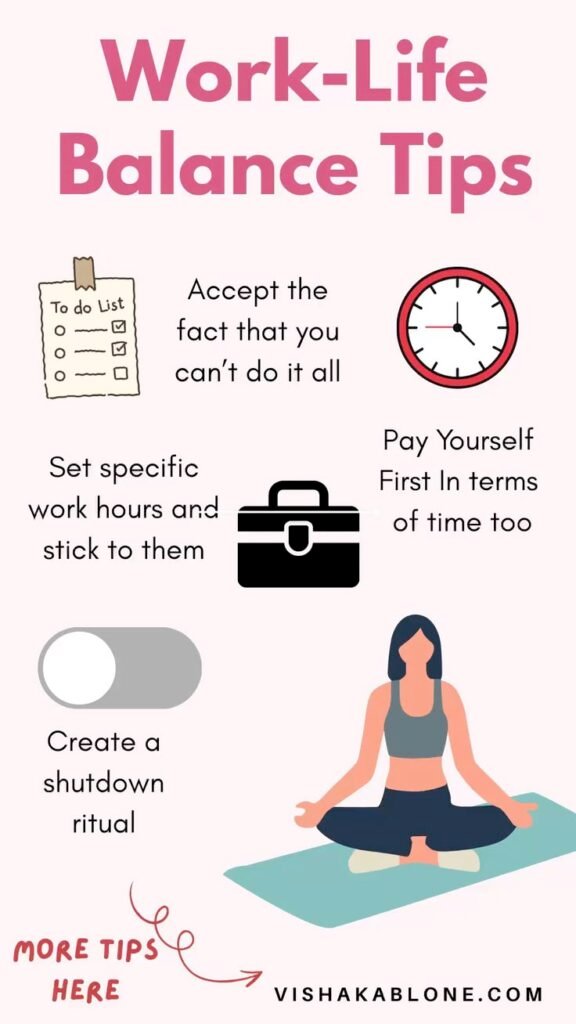
Achieving a sustainable work-life balance is essential for maintaining optimal health and productivity. Effective strategies begin with setting clear boundaries between professional and personal life. One of the primary aspects of boundary-setting involves defining specific work hours and conditions under which work can be conducted. This approach helps to prevent work from encroaching into personal time, thereby allowing individuals to focus on their mental health and family commitments without distractions.
Time management techniques are also pivotal in attaining a balanced lifestyle. Utilizing tools such as planners or digital calendars can help in organizing tasks and prioritizing responsibilities. Implementing the Pomodoro Technique, which involves working in focused intervals followed by short breaks, can enhance concentration while alleviating the feelings of being overwhelmed. This method not only increases work efficiency but also creates space for necessary downtime.
The importance of regular breaks cannot be overstated. Short periods of rest throughout the day can combat fatigue and enhance cognitive function. It is advisable to step away from work duties to engage in activities that recharge the mind and body. Simple practices such as a brief walk or mindfulness exercises can significantly reduce stress levels, ultimately fostering a healthier work environment.
Moreover, the integration of healthy habits plays a critical role in sustaining energy levels and promoting overall well-being. Regular physical activity, combined with a nutritious diet, is instrumental in boosting productivity and resilience to stress. By making time for exercise and maintaining a balanced diet, individuals can enhance their ability to handle the demands of both work and personal life. Adopting a balanced daily routine that encompasses work responsibilities alongside personal interests can lead to an improved quality of life.
Sustaining a work-life balance is a dynamic and ongoing process that often requires adjustment as personal and professional circumstances evolve. Regularly assessing and fine-tuning one’s approach to work-life integration is essential for long-term health and well-being. Individuals must recognize that factors such as career progression, family responsibilities, and shifts in personal priorities can all necessitate varying strategies to maintain equilibrium.
Effective self-reflection is crucial for evaluating whether current choices and routines support a healthy balance. This may involve setting aside time for periodic assessment, where one can consider aspects of life that require more attention, whether it be family commitments, health, or personal aspirations. Making a conscious effort to reflect on priorities will empower individuals to make informed adjustments to their schedules and commitments.
Additionally, the role of support systems cannot be underestimated in maintaining work-life balance. Family members, friends, and colleagues in the workplace contribute significantly to one’s ability to navigate challenges associated with managing time effectively. Open communication with these support networks helps in discussing needs and expectations, which can lead to better understanding and shared responsibilities.
Furthermore, organizations can cultivate a supportive workplace culture by promoting policies that prioritize employee well-being, such as flexible working hours and mental health resources. This creates an environment where employees feel valued and encouraged to maintain their work-life balance.
Lastly, developing resilience and adaptability is paramount in the pursuit of sustainable balance. By equipping oneself with strategies to cope with unexpected changes and challenges, individuals can better navigate the complexities of life. Emphasizing adaptability helps cultivate a mindset where work-life balance is not just a goal, but a continual journey.

